
Think you may have a cracked tooth?
If you feel pain when biting, sensitivity that comes and goes, or a tooth that “just doesn’t feel right,” you may have a crack that hasn’t fully broken yet.
In many cases, a cracked tooth can be treated conservatively—without immediately jumping to a crown or root canal.
At our office, we focus on preserving your natural tooth structure whenever possible using advanced adhesive techniques.
Serving patients in Summit, Millburn, Berkeley Heights, Chatham and surrounding areas of New Jersey.
Common Symptoms of a Cracked Tooth
How Do You Know If You Have a Cracked Tooth?
Cracks are often difficult to see on X-rays and may not cause constant pain. Common signs include:
- Pain when biting or chewing
- Sensitivity to cold or sweets
- Discomfort that comes and goes
- A tooth that feels “off” but looks normal
- Pain when releasing pressure after biting
If you’re experiencing any of these, early evaluation is critical.
The Traditional Approach
Do All Cracked Teeth Need Crowns or Root Canals?
Many patients are told that a cracked tooth automatically requires:
- A full dental crown
- Or, in some cases, a root canal
While these treatments are sometimes necessary, they often involve removing a significant amount of healthy tooth structure.
In certain cases, there may be more conservative options available.
A More Conservative Approach to Treating Cracked Teeth
Our approach focuses on:
- Preserving as much natural tooth structure as possible
- Stabilizing and sealing the crack
- Reinforcing the tooth using advanced bonding techniques
Rather than automatically preparing the tooth for a crown, we evaluate whether the tooth can be restored in a more conservative way.
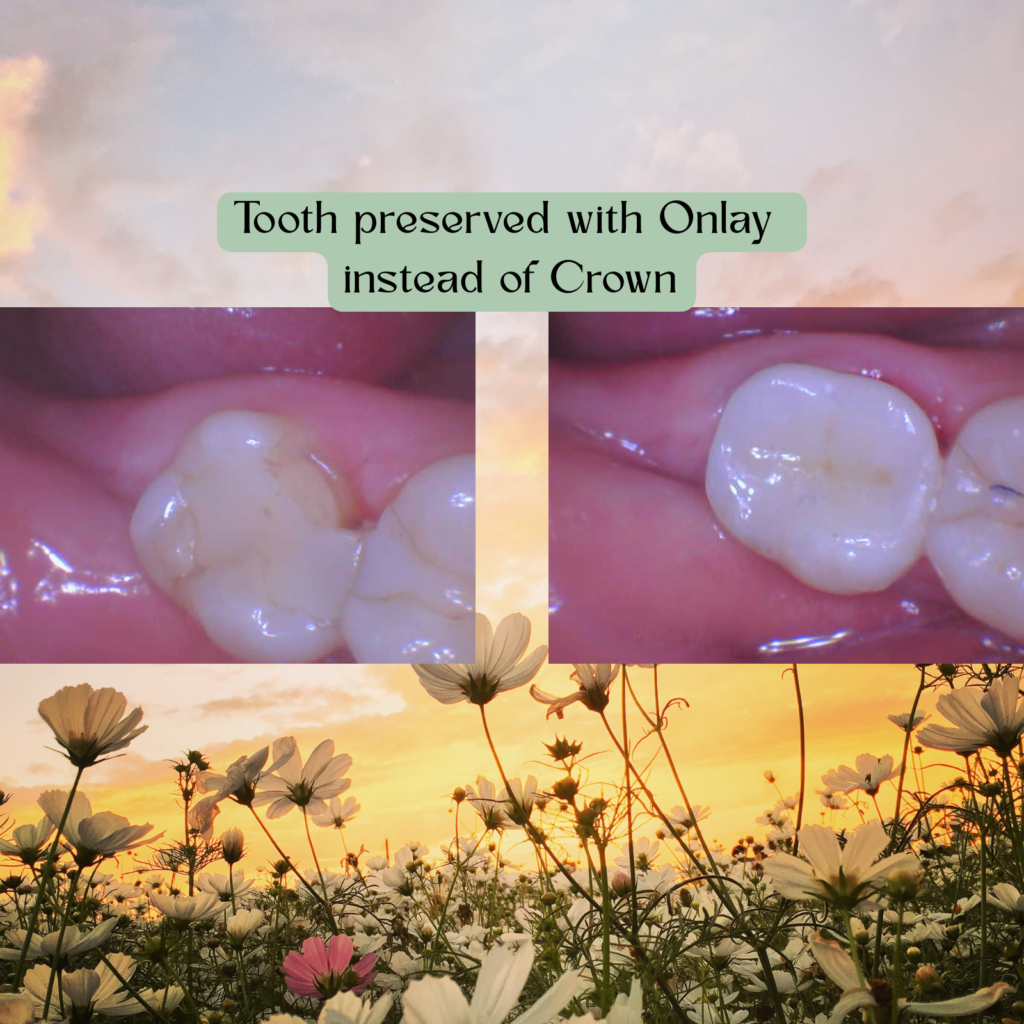
This type of treatment is often referred to as biomimetic dentistry, which aims to mimic the natural strength and function of the tooth.
When a Tooth Can Be Saved
Can My Cracked Tooth Be Saved?
Many cracked teeth can be successfully treated if:
- The crack has not extended below the gumline
- The tooth is not split in half
- The nerve is still healthy or minimally inflamed
Early diagnosis significantly increases the chances of saving the tooth.
When More Advanced Treatment Is Needed
When Is a Crown or Root Canal Necessary?
In some cases, more traditional treatment may still be the best option, such as when:
- The crack is too deep
- The tooth is structurally compromised
- There is significant infection or nerve damage
Our goal is always to recommend the least invasive treatment that will predictably succeed long-term.
Why Early Treatment Matters
What Happens If You Wait?
Cracks tend to worsen over time.
Delaying treatment can lead to:
- Deeper fractures
- Increased pain
- Need for root canal treatment
- Potential tooth loss
If something feels off, it’s best to evaluate it early.
Frequently Asked Questions:
Can a cracked tooth heal on its own?
No, cracks do not heal naturally. However, early treatment can prevent the crack from worsening.
Do all cracked teeth need crowns?
No. Some cracks can be treated with more conservative approaches depending on their size and location.
Is a cracked tooth an emergency?
Not always, but it should be evaluated as soon as possible to prevent progression.
Can you see a cracked tooth on an X-ray?
Not always. Many cracks are diagnosed based on symptoms and clinical examination.
Schedule a Cracked Tooth Evaluation
If you’re experiencing symptoms of a cracked tooth, early diagnosis can make the difference between saving your tooth conservatively or needing more extensive treatment.
We serve patients throughout Summit and surrounding New Jersey communities.